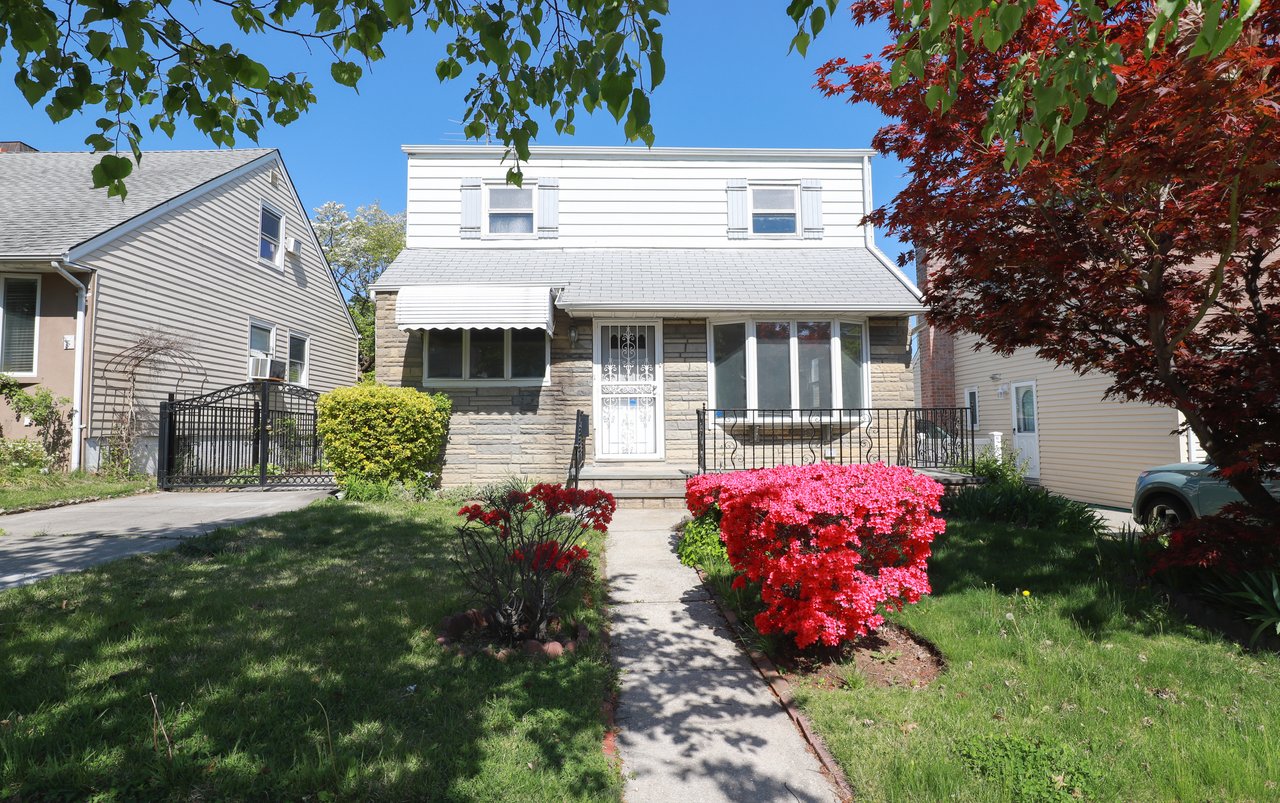
If you've been thinking about buying a home in New York City, today's mortgage rates might be giving you second thoughts. That's understandable.
As of late September 2026, the average 30-year fixed mortgage rate nationally is approximately 7%, according to Freddie Mac. In New York, average advertised rates are also in the 7% range, although the actual rate available to an individual buyer can vary considerably based on credit, down payment, loan amount, property type, points, lender, and other factors.
Compared with the unusually low mortgage rates buyers saw several years ago, borrowing money is clearly more expensive today.
But a higher mortgage rate doesn't necessarily mean buying a home no longer makes sense.
In fact, today's market may create opportunities for buyers who are willing to look beyond the interest rate and focus on the total cost and long-term strategy of buying a property.
First, put today's mortgage rates into perspective.
The sub-3% mortgage rates seen during the pandemic were historically unusual. Buyers who are waiting for those rates to return could be waiting a very long time.
Mortgage rates also don't move directly with the Federal Reserve's interest-rate decisions. They are influenced by inflation expectations, Treasury yields, economic conditions, and financial markets, which makes predicting exactly where rates will go extremely difficult.
The more useful question for a potential buyer isn't "When will mortgage rates finally come down?"
It's "Can I find a property and financing structure that makes sense for me at today's rate?"
Higher rates can create opportunity too.
When mortgage rates are very low, more buyers can afford to enter the market.
That sounds great, until you're competing with all of them for the same property.
A lower-rate environment can mean multiple offers, bidding wars, fewer seller concessions, and buyers feeling pressured to make decisions quickly.
Higher rates can remove some buyers from the market or cause others to wait.
For buyers who remain financially prepared, that can sometimes mean less competition and more room to negotiate.
Depending on the property and seller's circumstances, buyers may have the opportunities to negotiate on price, closing costs, repairs, or financing concessions that would have been much harder to obtain in an extremely competitive market.
Of course, this varies significantly by neighborhood and property. A well-priced home in a desirable neighborhood can still attract multiple buyers.
But today's interest rate is only one part of the negotiation.
1. Ask about a seller-paid mortgage rate buydown
Instead of focusing exclusively on reducing the purchase price, buyers can sometimes negotiate a seller credit toward their closing costs or the cost of buying down their mortgage rate.
A mortgage rate buydown involves paying money upfront to reduce the interest rate. There are temporary and permanent versions.
For example, with certain temporary buydown structures, the borrower's effective payment is reduced during the first one or more years of the mortgage before eventually reaching the full note-rate payment.
A permanent buydown uses discount points to obtain a lower interest rate for the loan.
Seller contributions are subject to loan-program and underwriting limits, so buyers should discuss the structure with their mortgage professional before negotiating it.
In the right situation, however, negotiating financing assistance can be more valuable to a buyer's monthly budget than simply negotiating a small reduction in purchase price.
2. Don't assume every lender will give you the same rate
Mortgage shopping matters. Different banks, mortgage lenders, brokers, and credit unions can offer different rates, points, fees, and loan programs to the exact same borrower.
That difference can become significant over the life of a mortgage. Buyers should compare more than the headline interest rate.
Look at: Interest rate + APR + points + lender fees + closing costs + monthly payment.
A lender offering the lowest advertised rate isn't necessarily offering the least expensive mortgage.
This can be especially important in New York City, where buyers may be purchasing co-ops, condos, multifamily homes, or higher-priced properties requiring different financing.
3. Consider an Adjustable-Rate Mortgage (when appropriate)
A traditional 30-year fixed mortgage isn't the only financing option.
An adjustable-rate mortgage (ARM) generally provides a fixed interest rate for an initial period and then adjusts according to the terms of the loan.
For example, a 7/1 or 7/6 ARM can provide an initial fixed period before adjustments begin.
ARMs aren't appropriate for everyone. Buyers need to understand the adjustment schedule, index, margin, rate caps, maximum possible payment, and what could happen if rates rise rather than fall.
But for certain buyers, particularly those who don't expect to keep the same mortgage for decades, an ARM may be worth discussing with a qualified mortgage professional. The important thing is not to choose a loan based solely on its initial rate.
4. Explore NYC's HomeFirst program
Some buyers may qualify for assistance than can change the affordability calculation considerably.
The NYC Department of Housing Preservation and Development's HomeFirst Down Payment Assistance Program currently offers qualified first-time homebuyers up to $100,000 toward down payment or closing costs.
The program applies to eligible owner-occupied one- to four-family homes, condominiums, and co-ops within New York City's five boroughs.
There are income limits, purchase-price limits, homebuyer-education requirements, minimum buyer-contribution requirements, and occupancy requirements.
For eligible buyers, however, assistance with upfront costs can make homeownership much more attainable, even in a higher-rate environment.
5. Look into New York State's SONYMA program
New York State also offers programs through the State of New York Mortgage Agency (SONYMA).
Depending on eligibility, buyers may have access to mortgage programs and down-payment assistance designed to make purchasing a home more affordable.
SONYMA's Down Payment Assistance Loan, for example, can provide eligible borrowers using a SONYMA mortgage with assistance toward their down payment, closing costs, or eligible mortgage-insurance expenses.
Income, purchase-price, and other eligibility restrictions apply, so buyers should verify the current requirements before relying on any particular program.
The larger point is important: Don't assume the only way to buy a home is 20% down plus a conventional 30-year mortgage. There may be alternatives.
6. A multifamily property can change the equation
This is particularly relevant in Queens. Instead of purchasing a single-family home, some buyers may consider an owner-occupied two-family or three-family property.
Why?
Because the additional unit or units can potentially generate rental income.
A buyer might live in one unit while renting another, allowing the rental income to help offset the cost of ownership. Depending on the loan program and underwriting requirements, lenders may also be able to consider qualifying rental income when determining how much a borrower can afford.
This doesn't mean every multifamily property is automatically a better investment. Buyers need to carefully review legal use, existing leases and tenants, property condition, taxes, insurance, operating expenses, expected rents, and financing.
But for buyers who are comfortable becoming landlords, buying a home and an income-producing asset at the same time can be worth exploring.
7. Consider co-ops and condos at different price points
A buyer doesn't necessarily have to start with a single-family house.
In many Queens neighborhoods, co-ops can offer a lower purchase price than comparable condominiums or houses.
Co-ops come with their own considerations, including maintenance charges, board approval, financial requirements, subletting rules, flip taxes or transfer fees, and building-specific policies.
But for buyers whose primary goal is to stop renting and begin building ownership equity, a co-op may provide another entry point into the NYC housing market.
The right first property doesn't necessarily have to be your forever home.
8. Improve the parts of the mortgage you can control
You can't control the bond market or tomorrow's mortgage rates.
You can work on the factors lenders use to price your loan.
That may include improving your credit, reducing credit-card balances, lowering your debt-to-income ratio, increasing your down payment, building cash reserves, comparing lenders, and evaluating different loan programs.
Before deciding that buying is impossible, have a lender run several scenarios:
- What happens if you put down 10% instead of 20%?
- Does paying points make financial sense?
- What are the available first-time buyer programs?
- Does a different loan structure change your monthly payment?
The first financing scenario you receive doesn't have to be the last one you consider.
9. Remember: you may be able to refinance later
A buyer should never purchase a home today based on the assumption that mortgage rates will definitely decline later.
No one can guarantee that.
The property should be affordable based on today's numbers.
But if rates eventually decline enough to justify the costs, homeowners may have the option to refinance into a lower-rate mortgage.
That creates an important distinction: You may be able to change your mortgage rate later. You can't go back later and purchase today's property at today's price.
If falling rates eventually bring more buyers back into the market, increased purchasing power could also increase competition for desirable properties. That's one reason waiting for the "perfect" interest rate doesn't necessarily produce the best buying opportunity.
Don't let one number make the entire decision.
A 7% mortgage rate can look intimidating, especially if you're comparing it with the 3% mortgages people obtained several years ago.
But buying a home involves much more than one number.
Purchase price matters. Negotiating power matters. Seller concessions matter. Down-payment assistance matters. Property type matters. Rental income matters. And how long you plan to own the property matters.
For some buyers, waiting will absolutely be the right decision. If the monthly payment isn't comfortable or buying would leave you without adequate savings, forcing a purchase simply because you're afraid of missing out doesn't make sense.
But if you've stopped looking only because mortgage rates aren't where you want them to be, it may be worth taking another look. The opportunity might not be a dramatically lower interest rate.
It could be a more negotiable seller, a better purchase price, assistance with closing costs, a rate buydown, a first-time buyer program, a multifamily property with rental income, or simply finding a property that fits comfortably within your budget.
Thinking about buying in Queens or New York City?
Every buyer's situation is different, and every neighborhood in New York City behaves differently.
At Key Impact Realty Group, we help buyers look beyond the asking price and evaluate the complete opportunity. From property type and neighborhood to comparable sales, negotiation strategy, potential rental income, and available financing options.
If you've been thinking about buying but today's mortgage rates have caused you to put your plans on hold, let's take a fresh look at the numbers.
You may have more options than you think.
Contact Key Impact Realty Group to discuss what you're looking for an explore properties that fir your budget and long-term goals.
Mortgage rates change frequently and vary by lender, borrower qualifications, loan program, property type, loan amount, points, and other factors. Assistance programs are subject to eligibility requirements, funding availability, and change. This article is for general informational purposes and is not mortgage, financial, tax, or legal advice.